
Introduction
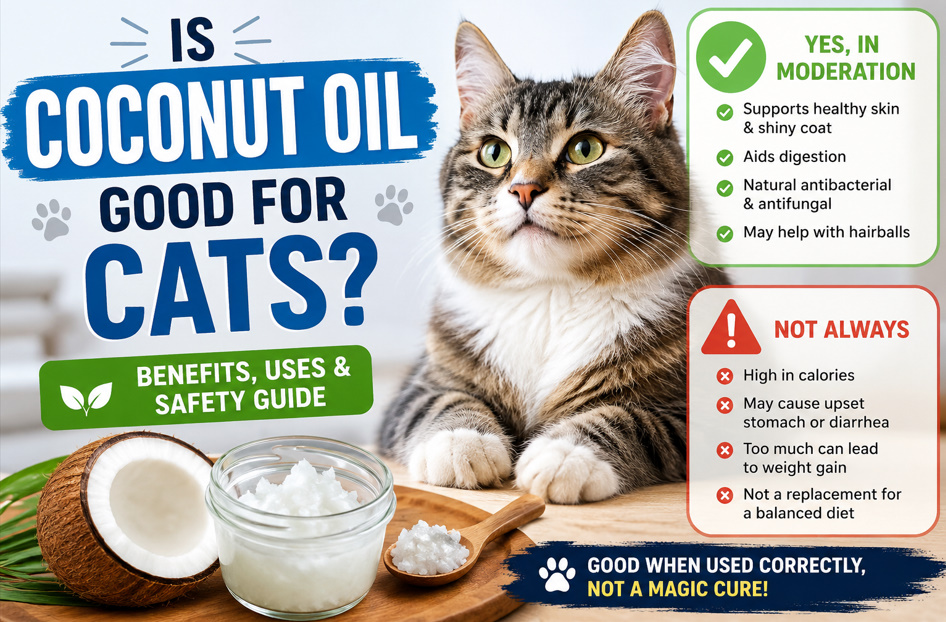
Many cat owners wonder, is coconut oil good for cats and whether it is a safe natural supplement. Coconut oil is often praised for supporting healthy skin, a shiny coat, digestion, and overall feline wellness. However, it also has potential risks if used incorrectly. This complete guide explores the benefits, side effects, safe feeding practices, and expert veterinary advice to help you make the best decision for your beloved cat.
Coconut oil for cats may offer potential benefits, but it should be used carefully and only in small amounts. While some owners use it for skin, coat, or digestive support, excessive consumption can cause stomach upset and other issues. Learn about the benefits, risks, safety tips, and vet-approved guidance before giving coconut oil to your cat.
Is Coconut Oil Good for Cats?
Coconut oil can benefit some cats when used correctly. It contains healthy medium-chain triglycerides, supports skin health, and may improve coat shine. However, it is not a miracle supplement and should only be offered in moderation. As both a veterinarian and cat owner, I always recommend consulting your veterinarian before adding coconut oil to your cat’s diet.
- 🐱 Coconut oil may support healthy skin.
- ✨ It can make a cat’s coat shinier.
- ❤️ Healthy fats provide extra energy.
- 🦠 Lauric acid has natural antimicrobial properties.
- 🥄 Always introduce tiny amounts first.
- ⚖️ Too much can cause weight gain.
- 🚫 Not every cat tolerates coconut oil.
- 💧 Fresh water should always be available.
- 👨⚕️ As a veterinarian, I monitor digestion after dietary changes.
- 🏡 As a cat owner, I noticed improved coat softness after careful use.
Benefits of Coconut Oil for Cats
Many pet owners ask whether coconut oil improves feline health. When used appropriately, it may help moisturize dry skin, reduce dandruff, promote a glossy coat, and support overall skin barrier function. During my years treating cats, I have seen positive results in selected healthy cats, although every cat responds differently.
- ✨ Supports a shiny coat.
- 🐾 Helps relieve dry paws.
- 💧 Moisturizes flaky skin.
- 🌱 May reduce mild dandruff.
- 🦠 Contains natural lauric acid.
- ❤️ Provides healthy dietary fats.
- 😺 Some cats enjoy the taste.
- 🧴 Can be applied externally.
- 👨⚕️ I have seen improved skin hydration in mild cases.
- 🏡 My own senior cat benefited from occasional topical application.
Risks and Side Effects of Coconut Oil for Cats
Although coconut oil has advantages, excessive use may lead to digestive upset, diarrhea, vomiting, unnecessary calorie intake, or obesity. Cats with pancreatitis or sensitive digestive systems require special caution. As a veterinarian, I always evaluate a cat’s overall health before recommending any nutritional supplement.
- 🚫 Too much may cause diarrhea.
- 🤢 Some cats may vomit.
- ⚖️ Extra calories can increase weight.
- 🩺 Cats with pancreatitis need caution.
- 🐱 Digestive sensitivity varies.
- 🥄 Avoid giving large amounts.
- 🍽️ Introduce slowly.
- 👀 Watch for allergic reactions.
- 👨⚕️ I recommend stopping use if stomach upset develops.
- 🏡 One rescued cat I cared for experienced loose stools after excessive coconut oil.
How to Safely Give Coconut Oil to Cats
If you decide to give coconut oil to your cat, moderation is essential. Choose pure, organic, virgin coconut oil without artificial additives or flavors. Introduce only a tiny amount and monitor your cat for digestive changes. As both a veterinarian and cat owner, I always prioritize safety over quick results.
- 🥄 Start with a very small amount.
- 🌿 Choose organic virgin coconut oil.
- 🚫 Avoid flavored coconut oil.
- 🐱 Mix it with regular cat food.
- 💧 Keep fresh water available.
- ⚖️ Use only occasionally.
- 👀 Watch your cat for 24–48 hours.
- 🧼 Store coconut oil in a clean container.
- 👨⚕️ I recommend introducing only one new supplement at a time.
- 🏡 My own cats accepted coconut oil better when mixed with wet food.
Can Coconut Oil Help Cats with Dry Skin and Hairballs?
Coconut oil is often promoted as a natural remedy for dry skin, itchy skin, dandruff, and hairballs. While some cats experience smoother skin and improved coat condition, scientific evidence remains limited. In my veterinary experience, coconut oil works best as supportive care alongside proper nutrition and regular grooming.
- ✨ May soften dry skin.
- 🧴 Helps moisturize rough paw pads.
- 🐱 Can improve coat appearance.
- 🌱 Supports healthy skin barrier.
- 🪮 Regular brushing reduces hairballs.
- 💧 Hydration remains essential.
- 🍽️ Balanced nutrition supports healthy fur.
- 🚫 Coconut oil is not a cure for allergies.
- 👨⚕️ I have seen better results when grooming and nutrition were combined.
- 🏡 My long-haired cat produced fewer hairballs with routine brushing and proper diet.
👨⚕️
When Should You Avoid Giving Coconut Oil to Cats?
Although coconut oil is safe for many healthy cats in small amounts, it is not suitable for every feline. Cats with obesity, pancreatitis, chronic digestive disorders, or special medical conditions may require different nutritional strategies. As a veterinarian, I always assess medical history before recommending dietary supplements.
- 🚫 Avoid if your cat has pancreatitis.
- ⚖️ Overweight cats need extra caution.
- 🤢 Stop use if vomiting occurs.
- 💩 Discontinue if diarrhea develops.
- 🩺 Consult your veterinarian first.
- 🐱 Cats with food sensitivities require monitoring.
- 🍽️ Never replace complete cat food.
- 💊 Consider medication interactions.
- 👨⚕️ I always evaluate health conditions before recommending supplements.
- 🏡 One overweight rescue cat improved more through portion control than added oils.
Final Verdict, Is Coconut Oil Good for Cats?
Coconut oil can be a helpful natural supplement for some cats when used responsibly. It may support skin health, coat shine, and overall wellness, but it is not essential for every feline. As both a veterinarian and cat owner, I recommend moderation, balanced nutrition, and regular veterinary checkups to keep cats healthy and happy.
- 🥥 Coconut oil can benefit some cats.
- ✨ It may improve coat shine.
- 💧 It can help moisturize dry skin.
- ⚖️ Moderation is always important.
- 🍽️ A balanced feline diet comes first.
- 🩺 Always consult your veterinarian before starting supplements.
- 🚫 Avoid excessive daily use.
- 👀 Monitor your cat for any side effects.
- 👨⚕️ In my veterinary practice, careful use has supported skin health in selected cats.
- 🏡 As a cat owner, I rely on proper nutrition, routine grooming, and regular health checks rather than any single supplement.
Conclusion
Coconut oil can be a beneficial addition to some cats’ diets when offered in moderation and with veterinary guidance. While it may improve skin health, coat quality, and overall comfort, it is not a substitute for balanced nutrition or professional medical care. Always monitor your cat’s response, choose high-quality virgin coconut oil, and prioritize a complete, protein-rich diet for lifelong feline health and happiness.