
Introduction
Maine Coon cats are admired for their majestic appearance, friendly personality, and luxurious coat. Many allergy sufferers wonder whether these gentle giants are hypoallergenic. Understanding cat allergies, allergen production, and proper grooming helps potential owners make informed decisions. This guide explains everything using veterinary knowledge, practical experience, and SEO-friendly insights.
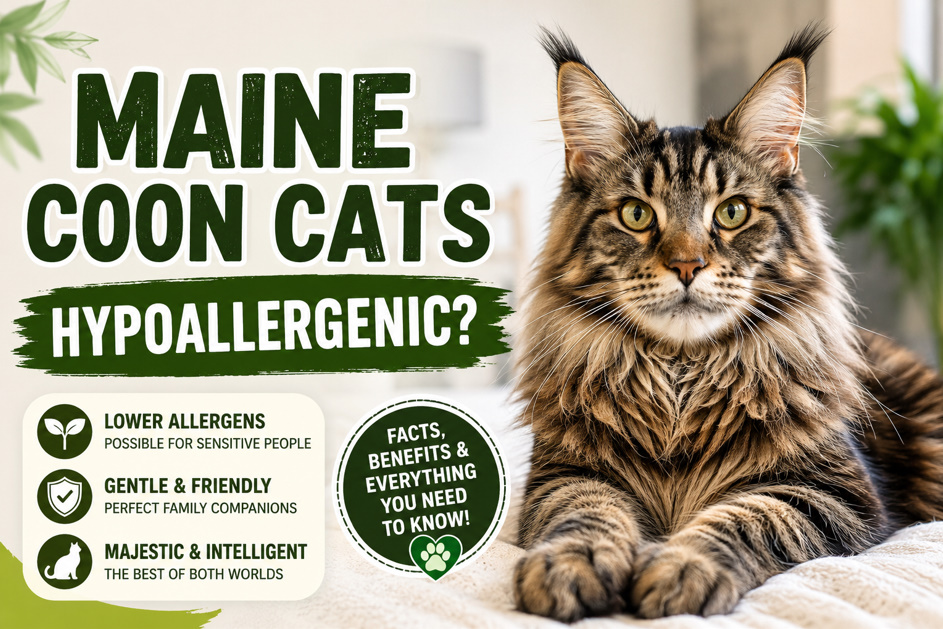
Maine Coon cats are not considered hypoallergenic, but some allergy sufferers may tolerate them better than other breeds. Their long, thick coats can trap dander, saliva, and allergens, potentially triggering symptoms. Regular grooming, vacuuming, cleaning, and keeping cats away from bedrooms may help reduce allergen exposure and make living together easier.
Are Maine Coon Cats Hypoallergenic?
Maine Coon cats are not completely hypoallergenic because they naturally produce the Fel d 1 protein, the primary cat allergen. However, proper grooming, balanced nutrition, regular cleaning, and individual allergy sensitivity determine how well someone can live comfortably with this beautiful long-haired cat breed.
- 🐱 Maine Coons are not truly hypoallergenic.
- 🧬 They produce Fel d 1 protein.
- 🌿 Allergy severity varies by person.
- 🏡 Clean homes reduce allergens.
- 🧹 Frequent vacuuming helps greatly.
- 💨 HEPA filters improve air quality.
- 🐾 Healthy skin means less dander.
- ❤️ Many allergy sufferers own them successfully.
- 📅 Groom regularly every week.
- ✅ Meet one before adopting.
What Causes Allergies in Maine Coon Cats?
Cat allergies are caused by microscopic proteins found in saliva, skin oils, urine, and dander—not simply cat hair. Maine Coons groom themselves frequently, spreading allergenic proteins onto their thick double coat. When fur sheds, these allergens become airborne and may trigger sneezing, itchy eyes, and congestion.
- 🧬 Allergies come from proteins.
- 😺 Hair is not the real problem.
- 🐾 Dander carries allergens.
- 💦 Saliva spreads Fel d 1.
- 🧹 Clean surfaces regularly.
- 🌬️ Improve room ventilation.
- 🛋️ Wash blankets frequently.
- 🧺 Clean pet bedding weekly.
- 💨 Air purifiers trap allergens.
- ✅ Allergy testing is beneficial.
Do Maine Coons Produce More Allergens Than Other Cat Breeds?
Research indicates Maine Coons do not necessarily produce more allergens than other breeds. Their larger body size and thick, luxurious coat simply trap more loose hair and dander. Individual genetics, grooming habits, overall health, and skin condition influence allergen levels more than breed alone.
- 🐱 Breed isn’t the only factor.
- 🧬 Every cat is different.
- 🧥 Thick fur traps dander.
- ✂️ Regular brushing reduces shedding.
- 🧹 Vacuum carpets frequently.
- 🌿 Healthy diets support skin.
- 🚿 Occasional bathing may help.
- 🏠 Keep living areas clean.
- ❤️ Consistent care matters most.
- ✅ Healthy cats shed less.
How Can Allergy Sufferers Live Comfortably With a Maine Coon?
Living with a Maine Coon is possible for many people with mild allergies by reducing allergen exposure. Consistent grooming, frequent cleaning, proper ventilation, air purifiers, and healthy nutrition all help create a more allergy-friendly environment while keeping your gentle giant comfortable, happy, and healthy every day.
- 🧹 Vacuum your home regularly.
- 💨 Use a HEPA air purifier.
- 🐱 Brush your cat weekly.
- 🧼 Wash your hands after petting.
- 🛏️ Clean bedding every week.
- 🚪 Keep bedrooms pet-free.
- 🌿 Reduce dust around the home.
- 💧 Wipe surfaces often.
- 🐾 Schedule regular veterinary checkups.
- ✅ Maintain a daily cleaning routine.
Does Grooming Reduce Allergens in Maine Coon Cats?
Regular grooming helps remove loose hair, dead skin cells, and surface dander before they spread throughout your home. Brushing several times each week and occasional bathing, when recommended by a veterinarian, can reduce allergen buildup while maintaining your Maine Coon’s thick, beautiful double coat.
- 🪮 Brush several times weekly.
- 🐱 Remove loose fur gently.
- 🚿 Bathe only when necessary.
- 🧴 Use cat-safe grooming products.
- ✂️ Prevent painful matting.
- 🧹 Clean grooming tools often.
- 💨 Reduce airborne allergens.
- 🩺 Watch for skin problems.
- ❤️ Reward your cat after grooming.
- ✅ Make grooming a routine.
What Is the Best Diet for a Healthy Maine Coon Coat?
Nutrition directly affects skin health, coat quality, and shedding. A balanced diet rich in animal protein, omega-3 fatty acids, taurine, vitamins, and minerals helps maintain healthy skin, reducing excessive dander while supporting immune health, digestion, and overall well-being throughout every life stage.
- 🥩 Choose high-quality protein.
- 🐟 Include omega-3 fatty acids.
- 💧 Keep fresh water available.
- 🥣 Feed complete balanced meals.
- 🌿 Avoid unnecessary fillers.
- 🩺 Monitor body weight.
- 🍗 Select premium cat food.
- 🧬 Support skin health naturally.
- ❤️ Healthy nutrition improves coats.
- ✅ Ask your veterinarian for guidance.
Final Verdict, Are Maine Coon Cats the Right Choice for Allergy Sufferers?
Although Maine Coon cats are not hypoallergenic, many individuals with mild allergies successfully keep them through excellent grooming, home hygiene, quality nutrition, and allergen management. Spending time with a Maine Coon before adoption helps determine your personal allergy response and long-term compatibility.
- 🐱 They are not hypoallergenic.
- 🧬 Fel d 1 remains present.
- 🧹 Groom consistently.
- 💨 Use HEPA air filters.
- 🏡 Keep your home clean.
- 🥩 Feed premium nutrition.
- 🩺 Schedule routine health exams.
- ❤️ Every allergy is unique.
- 🤝 Meet the cat before adopting.
Conclusion
Maine Coon cats are not truly hypoallergenic, but they can still be wonderful companions for many people with mild cat allergies. Since allergies are triggered by the Fel d 1 protein, not simply fur, proper grooming, balanced nutrition, home hygiene, and regular veterinary care can significantly reduce allergen exposure. Before adopting a Maine Coon, spend time with one to evaluate your personal allergy response. With the right care routine, these affectionate, intelligent, and gentle giants can become loving family members while keeping allergy symptoms manageable.